Campbell, Will D. (1986). Forty acres and a goat: a memoir. Atlanta: Peachtree Publishers.
Library Journal Reviews This is a funny, touching, beautifully written sequel to Campbell's autobiography, Brother to a Dragonfly. A Baptist preacher, farmer, and civil rights activist, Campbell has combined parable, allegory, and personal recollection to create a fascinating account of the civil rights movement of the 1950s and 1960s. Using animals as symbols and a composite black co-worker named T.J. Eaves as a sounding board, he charts the uncertain course of social change in the South during this turbulent period. One grows to admire Campbell and his pet goat, Jackson, enormously. Although not as focused as his previous memoir, this is wonderful to read. Highly recommended for academic and public libraries. Anthony O. Edmonds, History Dept., Ball State Univ., Muncie, Ind. Copyright 1986 Cahners Business Information.
Showing posts with label Civil Rights. Show all posts
Showing posts with label Civil Rights. Show all posts
Friday, April 29, 2011

Monday, March 7, 2011
A mighty long way
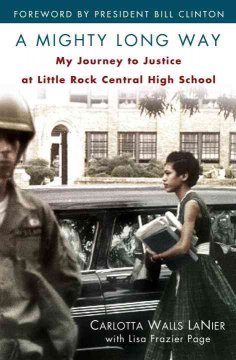
An inspiring and important story: Book-a-Day calendar.
Kirkus: Well-crafted look at the wrenching experience of the youngest of the "Little Rock Nine. Keenly observed and moving.
Saturday, January 15, 2011
King's dream
Book of the day on Book-a-Day calendar.
In this new exploration of the "I Have a Dream" speech, Sundquist places it in the history of American debates about racial justice and demonstrates how the speech, an exultant blend of grand poetry and powerful elocution, perfectly expresses the story of African-American freedom.
In this new exploration of the "I Have a Dream" speech, Sundquist places it in the history of American debates about racial justice and demonstrates how the speech, an exultant blend of grand poetry and powerful elocution, perfectly expresses the story of African-American freedom.
Subscribe to:
Posts (Atom)