
Showing posts with label Israel. Show all posts
Showing posts with label Israel. Show all posts
Wednesday, February 4, 2015

Saturday, March 24, 2012
The House of Rajani
A patron asked for this book. No library on Long Island owns it; only a handful of academic libraries do own it. Curious, I looked into it a bit. I found two reviews in the Guardian (UK). One, by Linda Grant (author of The Clothes on Their Backs, which I tried to read and didn't like), is not favorable (and with her own political views, in fact, sprinkled in): Revelatory as this reopening of the interred past may be for Israeli readers force-fed on the victors' version of history, the novel has a strongly didactic tone, as if one of the country's New Historians had turned their hand to fiction.

A second review, by the Guardian's Middle East editor, Ian Black, is favorable. He titles his review Palestine's catastrophe foreshadowed, and subtitles it Israeli writer Alon Hilu's acclaimed historical novel tackles the most sensitive of Zionist taboos head-on.
Edward Said's Orientalism has been invoked by some to deconstruct the book's themes of sexual and colonial domination. But it is the menacing shadow of future catastrophe – the unique experience of the Palestinian nakbah – that gives the story both its dramatic force and contemporary relevance: moves are under way in Israel to stop official funding for nakbah commemoration.
While Grant concerns herself with literary criticism, and tells of its being changed some from its original Hebrew writing to the English translation, Black writes about Hilu himself. Hilu says his own taboo-breaking views were partly moulded by his background: parents who immigrated to Israel from Syria and who did not share the dominant Ashkenazi (European Jewish) experience, with its emphasis on the Holocaust, and with no affinity for Arab life, language and culture.
The author's website has some blurbs from favorable reviews.
Sounds quite interesting.
A second review, by the Guardian's Middle East editor, Ian Black, is favorable. He titles his review Palestine's catastrophe foreshadowed, and subtitles it Israeli writer Alon Hilu's acclaimed historical novel tackles the most sensitive of Zionist taboos head-on.
Edward Said's Orientalism has been invoked by some to deconstruct the book's themes of sexual and colonial domination. But it is the menacing shadow of future catastrophe – the unique experience of the Palestinian nakbah – that gives the story both its dramatic force and contemporary relevance: moves are under way in Israel to stop official funding for nakbah commemoration.
While Grant concerns herself with literary criticism, and tells of its being changed some from its original Hebrew writing to the English translation, Black writes about Hilu himself. Hilu says his own taboo-breaking views were partly moulded by his background: parents who immigrated to Israel from Syria and who did not share the dominant Ashkenazi (European Jewish) experience, with its emphasis on the Holocaust, and with no affinity for Arab life, language and culture.
The author's website has some blurbs from favorable reviews.
Sounds quite interesting.
Wednesday, March 14, 2012
60 years as a photojournalist
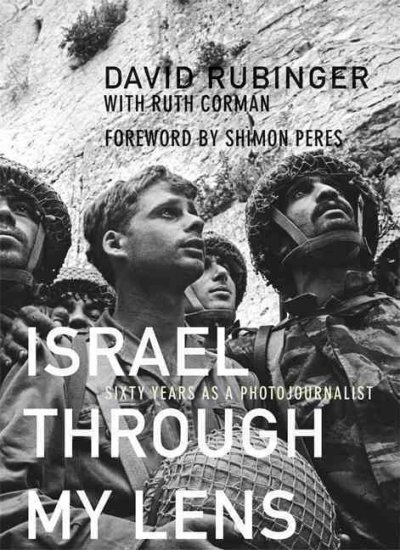 In February I was hungry to find a new book to read. I did not immediately remember the name of the author of a book I greatly enjoyed (it turned out to be The beautiful things that heaven bears, by Dinaw Mengestu), only remembering that he was Ethiopian American. Thus, I searched for the keyword Ethiopia, and, lo and behold, came up with this book (as well as with a biography of Marcus Garvey, Negro with a hat, by Colin Grant). This book includes a chapter, Immigration from Russia and Ethiopia.
Saturday, April 16, 2011
Buenos Aires
Hunting Eichmann : how a band of survivors and a young spy agency chased down the world's most notorious Nazi. Neal Bascomb. Boston : Houghton Mifflin Harcourt. 2009.
Wednesday, February 23, 2011
Being Indian, being Israeli
Migration, diaspora and Indian Jews in Israel --
Where are the Indian Jews today? Immigration and the Israeli setting --
Emigration from India: "When we came to the land of milk and honey" --
Accountants as watchmen and clerks digging roads: negotiating work and professions --
Raising Jewish families in Israel: gender, religious practice and life cycle rituals --
Mediating assimilation and separation: community networks, national politics and Indian-Israeli identit
Where are the Indian Jews today? Immigration and the Israeli setting --
Emigration from India: "When we came to the land of milk and honey" --
Accountants as watchmen and clerks digging roads: negotiating work and professions --
Raising Jewish families in Israel: gender, religious practice and life cycle rituals --
Mediating assimilation and separation: community networks, national politics and Indian-Israeli identit
Subscribe to:
Posts (Atom)